




Welcome to this very first episode our this new series “This Week We’ve Learned …”. As you know our Mandarin Zest Substack mainly focused on two series; an HSK review on Mondays and a article analysis on Wednesdays.
While these series are structured and rich in practical information, they feel a bit unpersonal.
As we are both learners ourselves, we keep on discovering new words, expressions and cultural facts every week, and we thought it would be a good idea to share them with you. In this series, we will be sharing random Chinese language discovery we made during the past week.
袐/秘 - “mì” vs. “bì”
Have you ever noticed how the character 袐/秘 is always pronounced “mì” like in 秘密 (mìmì) meaning secret. Yet, look at the transliteration of the country Peru 秘鲁/袐魯(Bìlŭ). The character 袐/秘 is then pronounced “bì”.
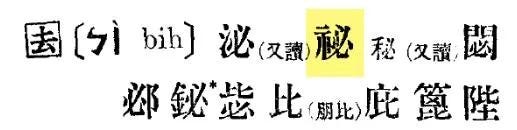
After doing some research, we found out that “bì” was the earliest pronouciation, and that was the pronunciation when China gave its name to Peru - 秘鲁. Overtime however, the pronunciation of the character changed to “mì”. But since 秘鲁 “mìlŭ” would no longer sound like “Peru”, they dicided to keep the old pronunciation only for this specific case.
Since then 袐/秘 is pronounced “bì” for 秘鲁, and “mì” in all the other words!
土豪 (tǔháo) - the Chinese “new rich”
On Monday, I was leading a study session for advanced Chinese learners, and we had an interesting discussion about the concept of “new rich” in China and how it compares to other countries in East Asia and beyond.
The “new rich” in Chinese is 土豪 (tǔháo). This word originally meant “a local tyrant” or “powerful landowner”. It is created with two words:
土 (tǔ) — earth, soil; also means unsophisticated or lacking refinement
豪 (háo) — wealthy, powerful, bold, extravagant
土豪 first referred to an “unsophisticated countryside landowner” who had money and power. The years of feudalism has been long gone, so the word now has a new definition.
From my experience, the concept of “new rich” behaviour often appears across Asia. In places such as Taiwan and Indonesia, I have encountered perceptions that often associate Chinese travellers with this image: a preference for luxury brands, status symbols, and more comfortable forms of travel.
In a sentence it would look like:
中国游客很土豪。
Zhōngguó yóukè hěn tǔháo.
"Chinese tourists are very tuhao (flashy/new rich)."
爱好 (àihào) vs 嗜好 (shìhào)
While recently talking with my Taiwanese friend, she introduced me to the word 嗜好 (shìhào) that I have never known before.
We were discussing men (yeah, I know) and she said that she doesn’t like when a man has a bad 嗜好.
Both 爱好 and 嗜好 mean "hobby, preference," but they have different tones and usage. 爱好 indicates a hobby or liking of something and is neutral or positive.
我的爱好是看书。
Wǒ de àihào shì kànshū.
My hobby is reading.
嗜好 is a more formal word that indicates something stronger, like obsession, strong inclination and is often related to a bad habit.
他有抽烟的嗜好。
Tā yǒu chōuyān de shìhào.
He has a habit of smoking.
Definitely not something I would personally like in a man!
Cats are mythical creatures
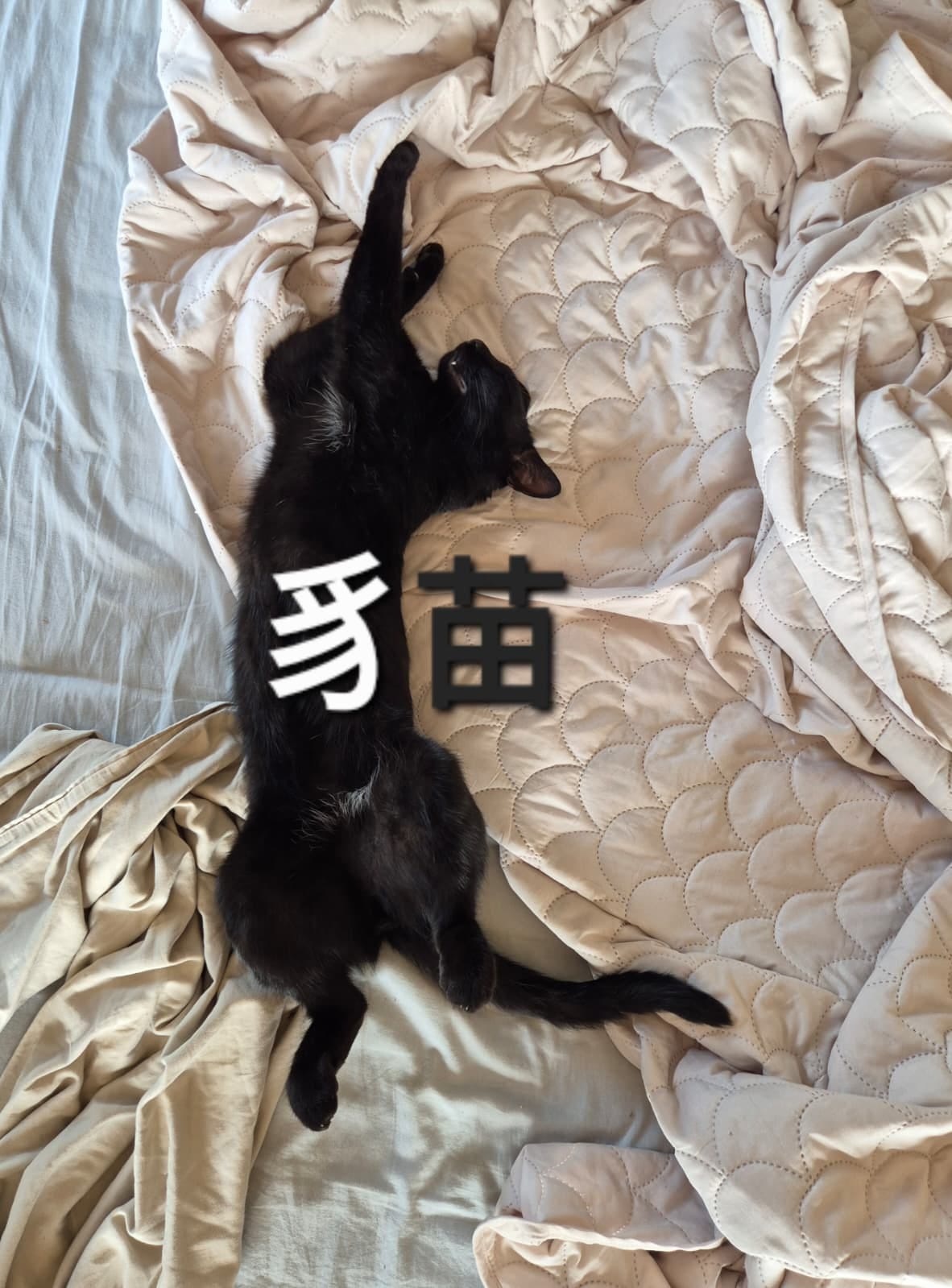
Look at the traditional character for cat, 貓. It is one of the few animal characters that contains the radical 豸, which is used to refer to mythical creatures and spirit animals. The radical itself is a variant of the character 廌, representing a Chinese unicorn.
And this is no coincidence. Cats have long been regarded as special animals in imperial China. As this passage from the Book of Rites clearly states:
“古之君子,使之必報之。迎貓,為其食田鼠也;迎虎,為其食田豕也,迎而祭之也。”
“The wise and gentle rulers of yore will always repay the good deeds that others have done for them. Welcome the cats, for they are hunters of mice; welcome the tigers, for they are hunters of boars; welcome them and worship them”.
Did you know that more than 200 cats inhabited the Forbidden City during the final years of the Qing dynasty, keeping the imperial palace free of rodents. And many of them were actually descendants of cats owned by previous dynasties.
In simplified Chinese (猫), the 豸 radical was replaced with 犭, which means “dog” but is used more broadly for a range of mammals. In doing so, the character was officially stripped of its connection to its more mystical origins.
My cat (in the picture) appreciates that I learned traditional characters, for he is a divine creature.

Thanks for reading!
Antoine & Dorota
🍊 Follow Mandarin Zest: